
Checking Holster Compatibility Without Relying on a Model Name Alone
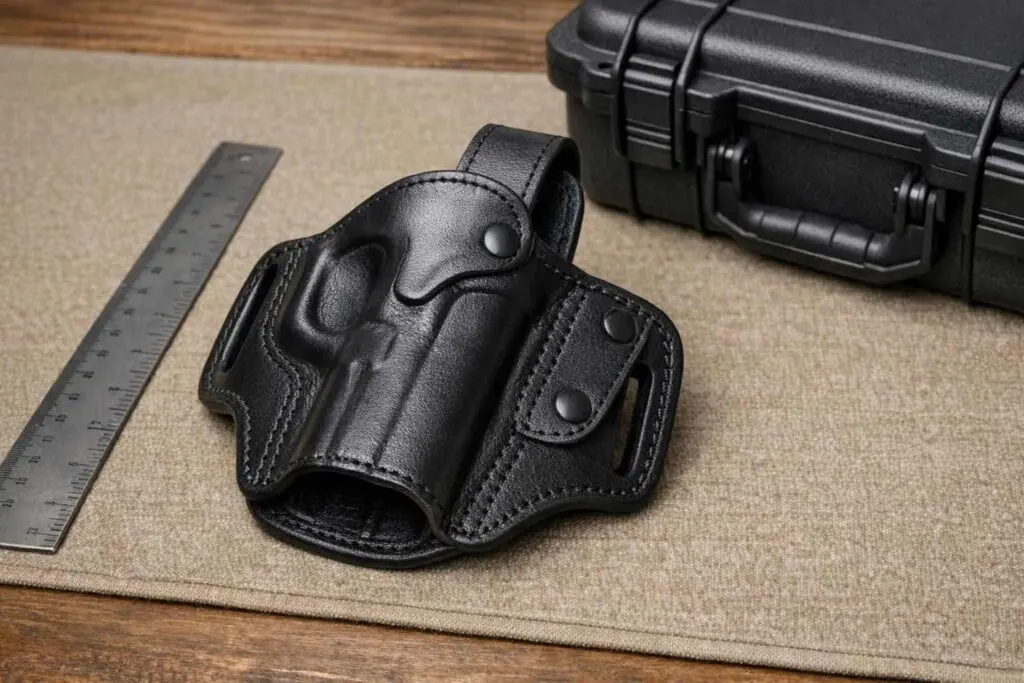
Even certain Taurus models, that belong to the same model line, can have slightly different configurations in terms of dimensions and features. These differences must be taken into consideration when selecting a holster for your handgun. Measuring your handgun and comparing the results to the dimensions listed for a particular holster will enable you to check for adequate fit and ensure that your handgun will be properly secured in order to provide maximum protection.
Know Your Handgun Inside and Out
Studying your firearm is key to discovering the suitable holster. Above and beyond the model name, study the frame, slide, barrel, and other key features of your firearm. In studying your firearm, take note of factors including the length of the barrel, the presence of an external safety, the type of hammer (open or enclosed), as well as any mounted accessories such as optics, lasers, or firearm rails. Consult your owner's manual and the manufacturer's specifications in researching your firearm. If needed, contact the handgun manufacturer directly for further clarification in determining your particular handgun model.
These differences would best be explained by examining the owner's manual for your handgun and the manufacturer's specifications for your gun. Often handgun models of the same name can have slight variations such as the slide, grips or trigger guards being slightly different. These would need to be considered when purchasing a holster and could render a "stock" holster to be less than optimal for your particular handgun.
Dimensions Speak Louder Than Names
When selecting a holster for your handgun, there are key dimensions of your firearm that must be matched by the holster in order to ensure proper fit. Key dimensions include length, height, width and relationship of the barrel, slide and sight channel to the remainder of the frame and the trigger guard. For example, holsters for handguns with longer barrels will not provide the same retention for handguns with shorter barrels. Holster designed for certain controls, sights and optics will also require additional clearance for comfortable and secure wear.
Comparing a holster's specifications to the handgun's dimensions is especially important for determining barrel length. A longer barrel can lead to problems such as poor retention of shorter models. Also the number and type of controls such as as safeties, and the type of sights and optics that a holster is designed for can affect the amount of clearance that is needed. Will the holster allow adequate access to the gun?
Choosing Between Molded, Adjustable, and Universal Holsters
Molded holsters are the best option for those that will be wearing the holster on a constant basis and have a certain model of firearm. The shape of the holster will provide the proper amount of support and stability to the firearm for safe carrying. Those who plan on wearing the holster on a regular basis and have multiple firearms of similar design may look at an adjustable holster. These types of holsters are typically equipped with straps and screws that can be adjusted to fit different firearm configurations. It is crucial to check the fit after any adjustments to ensure that all of the hardware is tight and will not cause any problems.
When choosing a universal holster to store your Taurus firearm for casual use, ensure that it completely encompasses the trigger area to provide consistent support to the gun. In checking for fit, make sure that all critical parts of the firearm are fully covered to prevent any possible damage. If the holster seems to wobble or moves excessively on the gun, then it would be best to look for an alternative to ensure safe storage of your firearm.
Prioritizing Retention for Safety
The retention of your firearm is important, not only for shooting well but for safe carry as well. The holster can use two types of retention: passive or active. Passive holsters rely on the shape of the holster to hold your firearm in place. Active holsters use straps or buttons to retain the firearm in the holster. It is very important to realize where on the handgun the retention force is applied. It must not interfere with any trigger, trigger guard, or other essential controls. If a holster requires you to move your finger towards the trigger to release the retention, it could be very problematic. Read instructions carefully for proper installation of your retention feature and be sure to check for proper function with your unloaded firearm before hitting the streets with live ammunition.
It is imperative to remember that you are checking the holster for an unloaded gun. Follow the manufacturer's instructions to properly put the gun in the holster. Verify that the gun sits properly in the holster and that all features of the holster, such as retention, are functioning as intended. Make sure that the gun will remain secure while wearing the holster in normal activities.
Avoiding Common Pitfalls
Be careful when a seller is using stock images and does not show all critical features like external safety, or optics, or the barrel length. Some seller are just listing same holster for many different models and hope that buyer will not find out that the holster was not made for the exact model of the handgun.
Many assume that if a holster is to remain loose, you can simply screw down every screw on the holster. But you must remember that tight holsters are just as bad as loose holsters for having impacted functionality to the handgun or the holster itself. So follow the manufacturer's specified directions for making any type of adjustments and make sure to keep the fit controlled and within defined limits.
The same holster for different carry styles is an entire different ball game. Inadequate support in certain carry positions can create unintended consequences. We can create a pocket style holster or ankle holster but a retention design suited for hip carry would not necessarily translate.
Final Verification: A Must Before Carrying
Finally, you need to complete an actual fit test of the purchased holster and the gun you will be carrying. This test needs to confirm the exact gun model you have, review the holster's dimensions against those of your gun to determine if there are adequate contact points to support the proper retention of your handgun, verify that all parts of the gun fit within the boundaries of the holster, determine if there is adequate clearance around the trigger guard and sights of your gun to ensure that the holster will not interfere with the normal operation of your handgun, and ensure that you can gain immediate access to the grip of your handgun for emergency defense.
You must also check as to whether new accessories such as optical sights, lamps or different Front sights have been mounted on your handgun. In such cases the fit must also be checked again. If in doubt as to the possibility of carrying your handgun in a new holster, please consult the manufacturer of the holster or a specialized dealer. Additionally you must observe the legal regulations concerning transportation and storage of firearms and amplitude of use in your country.